Characterization of orography-influenced riming and secondary ice production and their effects on precipitation rates using radar polarimetry and Doppler spectra (CORSIPP)
Abstract
Snowfall plays an important role in the Earth's water cycle, especially in orographically complex regions. However, snowfall in these regions is still poorly understood and subject to many uncertainties. CORSIPP aims to answer the following questions:
- Which processes influence snowfall formation and snowfall rates in orographically complex terrain?
- Which microphysical processes dominate precipitation formation and how do they influence precipitation rates?
- What are the external forcing factors in complex terrain?
The project focuses on secondary ice production (SIP), especially in connection with riming processes, and analyses the influence of turbulence and frontal systems. For that purpose, a scanning W-band cloud radar and a novel video in situ snowfall sensor gathered extensive data for the entire winter season 2022–2023 in the Colorado Rocky Mountains as part of the SAIL campaign (Surface Atmosphere Integrated Field Laboratory: sail.lbl.gov).
By simultaneously measuring snowfall with a Video In-Situ Snowfall Sensor (VISSS, Maahn et al., 2024) and a 94 GHz dual-polarimetric W-band cloud radar (LIMRAD94, Küchler et al., 2017) direct information on the shape and size of individual snow particles is obtained and enables derivation of particle size distributions and polarimetric quantities for the observed volume. The synergistic use of the two instruments and the forward operator PAMTRA allows the project to address these questions.
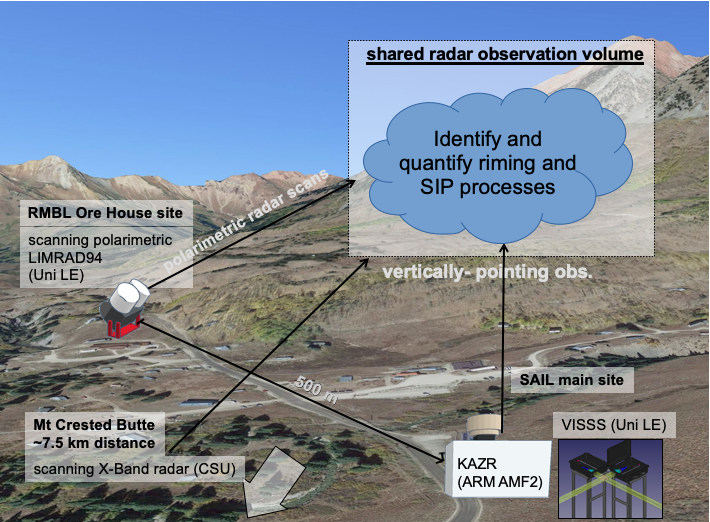
The project CORSIPP is dedicated to understanding riming and secondary ice production (SIP) processes in complex terrain. For this, we operated an innovative simultaneous-transmission-simultaneous-reception (STSR) scanning W-band cloud radar (LIMRAD94) together with the video in situ snowfall sensor (VISSS) for one entire winter season in the Colorado Rocky Mountain. The instruments were a part of the Atmospheric Radiation Measurement (ARM) Surface Atmosphere Integrated Field Laboratory (SAIL) campaign where a Ka-band (ARM-KAZR) and a X-band radar (from Colorado State University, CSU) were deployed.
Results show that combining multiple radar variables improves identification of snow processes, though turbulence complicates interpretation. A turbulent air layer, driven by orography and wind, enhances aggregation, riming, and SIP, with ice multiplication in the turbulent layer strongest at −13 °C to −15 °C due to ice collisional fragmentation. At the surface, snowfall consists mainly of aggregates, rimed particles, and graupel, depending on temperature. SIP can contribute up to ~50 % of precipitation under favorable conditions.
Investigating polarimetric radar signatures
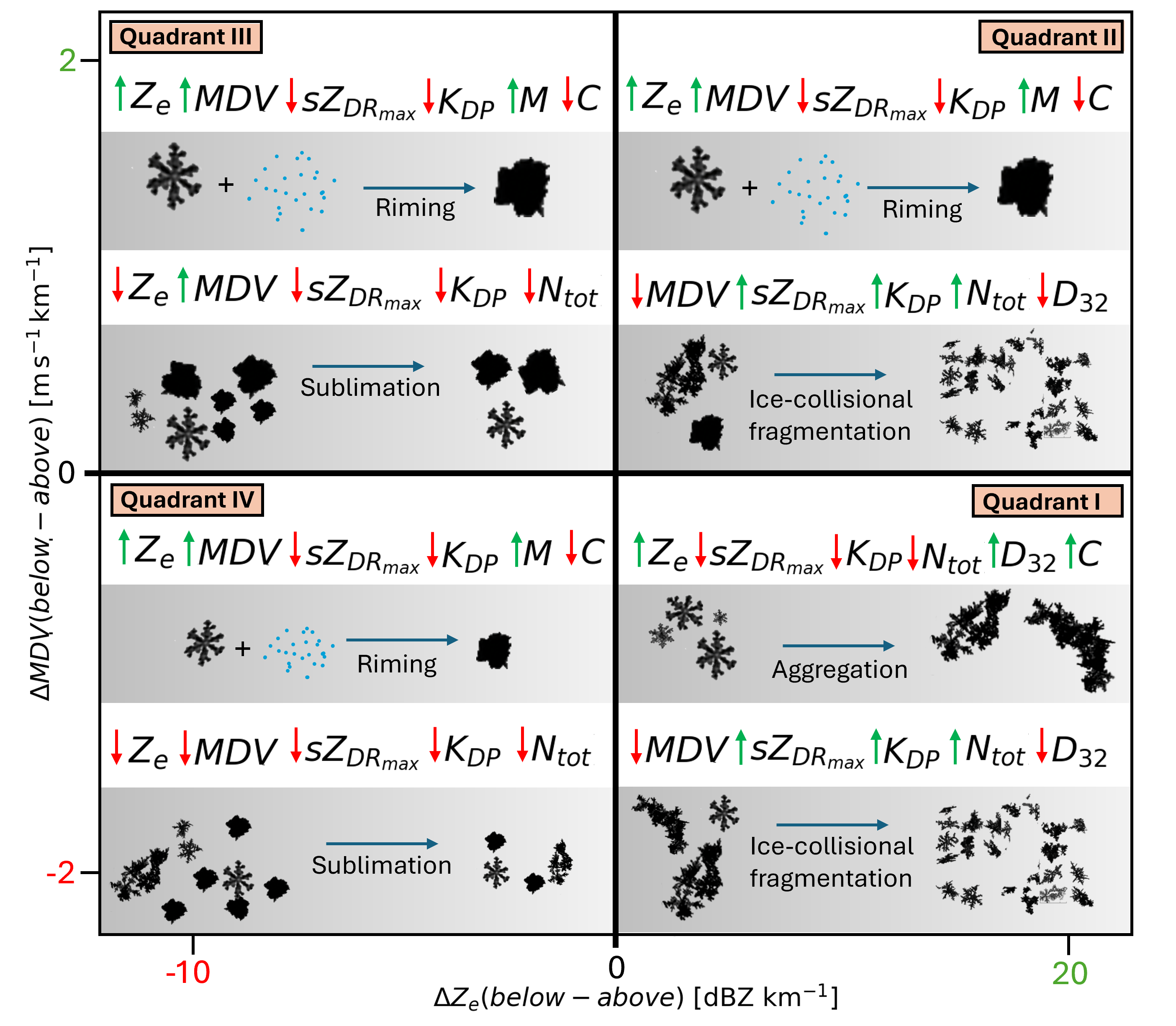
Polarimetric radar variables (e.g., specific differential phase KDP, differential reflectivity ZDR) are sensitive to particle shape, size, and concentration and can provide insight into snow microphysical processes such as riming, aggregation, and SIP (see Fig. 1). However, their interpretation remains uncertain due to limited in situ validation. Addressing this research gap forms the first study during CORSIPP, published in Atmospheric Chemistry and Physics (Kötsche et al., 2025).
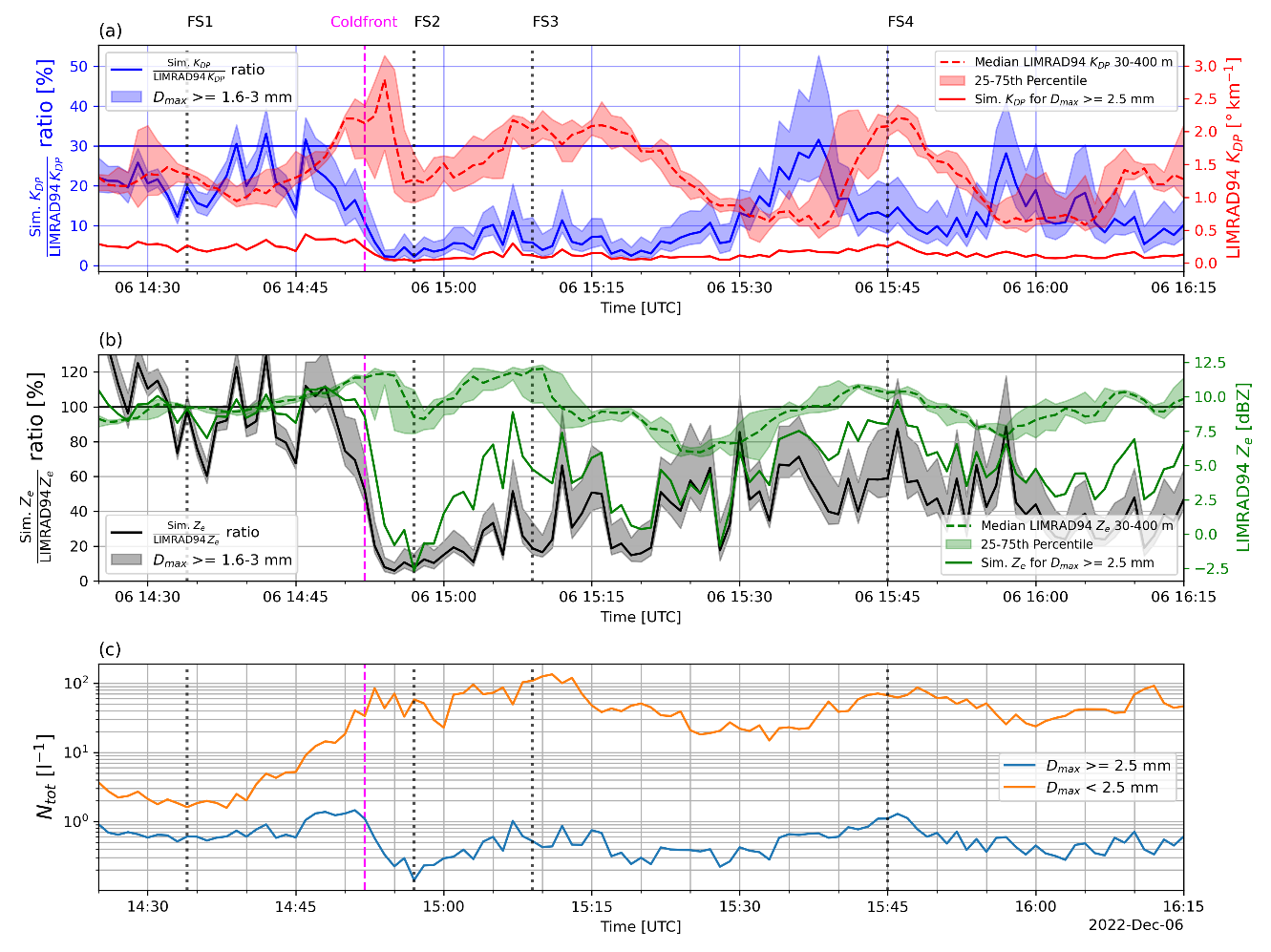
The analysis shows that W-band KDP is primarily sensitive to small anisotropic ice particles (D < 1.5 mm), while large aggregates (D ≥ 2.5 mm) contribute only about 10–20 % near the surface. Combining KDP, ZDR, and spectrally resolved ZDR improves identification of dominant processes. However, KDP remains complex and requires careful interpretation due to turbulence, particle size distribution variability, and non-Rayleigh effects.
Influence of orographic turbulence
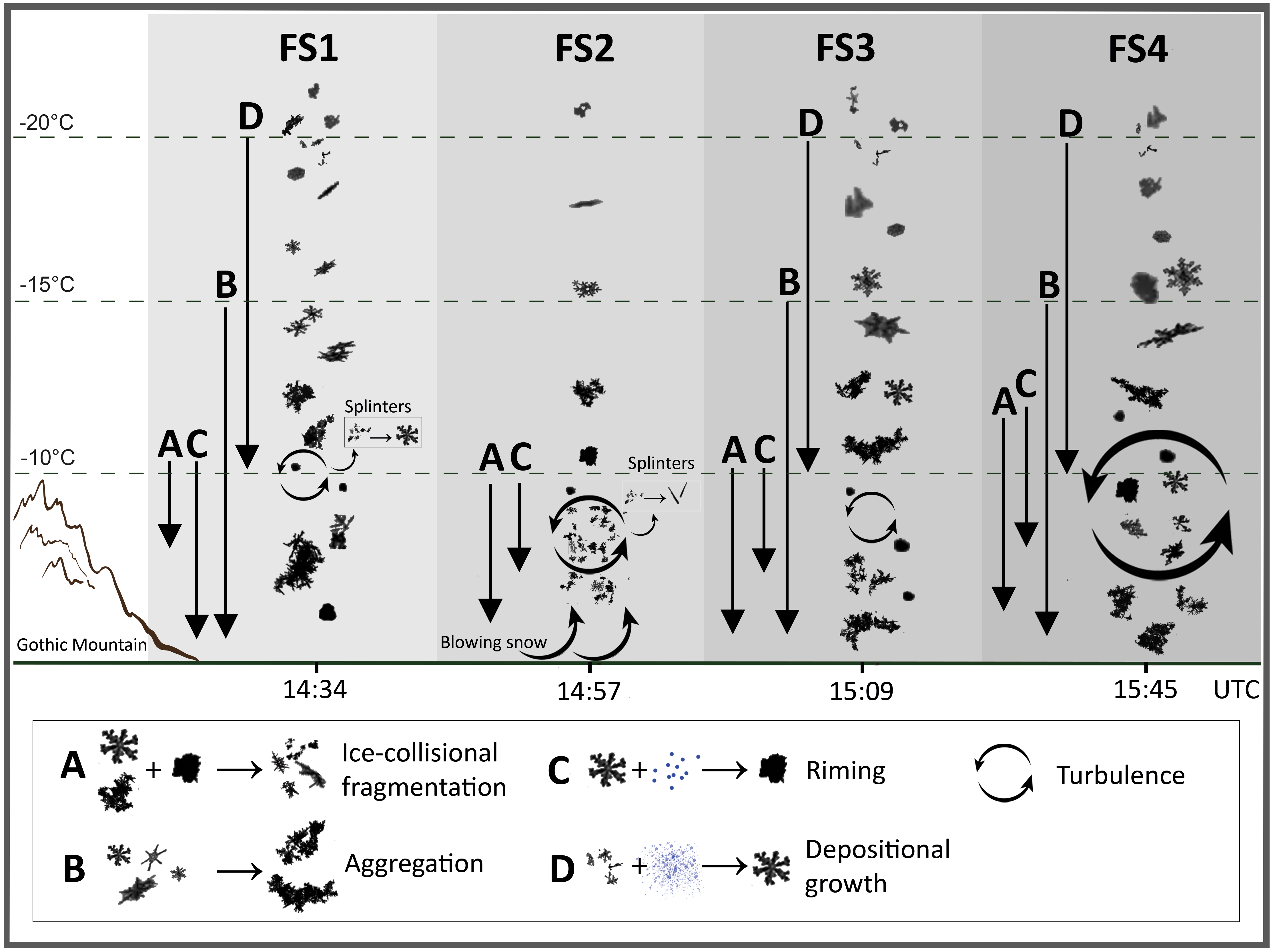
The influence of orographic turbulence on snow microphysical processes and surface snowfall, as well as its quantification using radar polarimetry, remains insufficiently quantified. Addressing this research gap forms the second study during CORSIPP, published in ACP (Kötsche et al., 2026). A turbulent layer was present during most precipitation events (September 2021–May 2023), with its height controlled by terrain and wind, typically forming in the lee of Gothic Mountain. This layer enhances aggregation, riming, SIP, and sublimation, as shown by comparing radar observations above and below it (see Fig. 2).
A novel approach combining LIMRAD94 KDP, VISSS particle data, and radar forward modeling enabled one of the first systematic quantifications of SIP in orographic turbulence. Ice multiplication peaks between −13 °C and −15 °C and decreases at warmer temperatures (> −10 °C), consistent with enhanced ice–ice collisions.
Surface snowfall and climate implications
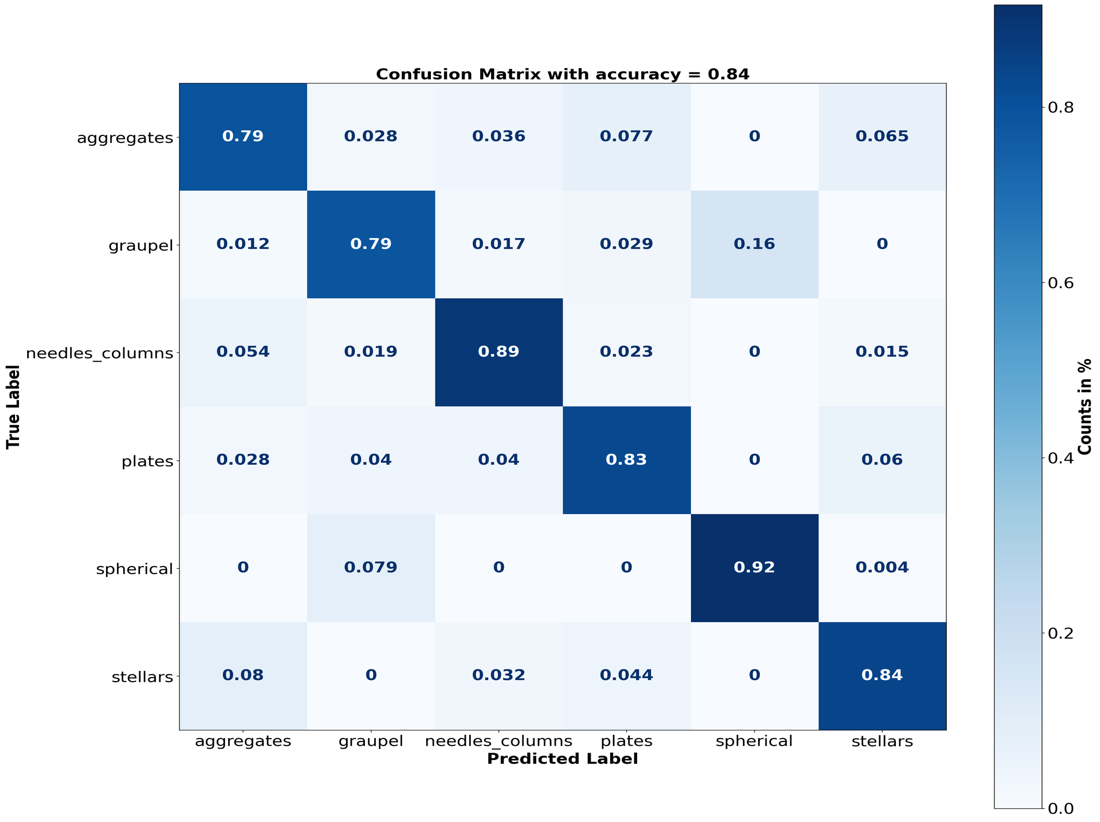
Each type of ice particle reflects distinct growth pathways and environmental conditions within the cloud, contributing differently to the overall precipitation rate. Long-term changes in snowfall may therefore indicate shifts in dominant microphysical regimes. A fuzzy logic approach to determine ice particle shape was developed. Surface snowfall rates during CORSIPP were found to be dominated by aggregates, rimed particles, and graupel, depending on temperature. Model estimates suggest that SIP in the turbulent layer can contribute substantially to precipitation (27–55 %) under favorable conditions.
Deviations and limitations
The omnipresent turbulence at the measurement site degraded the interpretability of polarimetric signals and inhibited the use of radar Doppler spectra-based retrieval techniques such as the liquid water detection tool VOODOO (Schimmel et al., 2020) or the cloud microphysics detection tool PEAKO (Kalesse et al., 2019; Vogl et al., 2024). LDR was not available for most of the time because the ARM Ka-band radar was deployed in single-polarization mode. This made it impossible to apply the SIP detection method by Luke et al. (2021). The advance of the PAMTRA radar forward operator (Mech et al., 2020) could not be conducted due to time and personnel constraints.
References
Hover a citation in the text for context; click it to arrive here.
-
Kötsche, A., M. Maahn, V. Ettrichrätz, and H. Kalesse-Los, 2026. Snow microphysical processes in orographic turbulence revealed by cloud radar and in situ snowfall camera observations.
-
Kötsche, A., A. Myagkov, L. von Terzi, M. Maahn, V. Ettrichrätz, T. Vogl, A. Ryzhkov, P. Bukovcic, D. Ori, and H. Kalesse-Los, 2025. Investigating KDP signatures inside and below the dendritic growth layer with W-band Doppler radar and in situ snowfall camera observations.
-
Luke, E. P., F. Yang, P. Kollias, A. M. Vogelmann, and M. Maahn, 2021. New insights into ice multiplication using remote-sensing observations of slightly supercooled mixed-phase clouds in the Arctic.
-
Mech, M., M. Maahn, S. Kneifel, D. Ori, E. Orlandi, P. Kollias, V. Schemann, and S. Crewell, 2020. PAMTRA 1.0: The Passive and Active Microwave radiative TRAnsfer tool for simulating radiometer and radar measurements of the cloudy atmosphere.
-
Schimmel, W., H. Kalesse, and P. Seifert, 2020. VOODOO—A deep learning approach for revealing supercooled liquid beyond lidar attenuation.
-
Kalesse, H., T. Vogl, C. Paduraru, and E. Luke, 2019. Development and validation of a supervised machine learning radar Doppler spectra peak-finding algorithm.
-
Vogl, T., M. Radenz, F. Ramelli, R. Gierens, and H. Kalesse-Los, 2024. PEAKO and peakTree: Tools for detecting and interpreting peaks in cloud radar Doppler spectra – capabilities and limitations.
In the second year of CORSIPP the dataset was analyzed statistically to understand KDP signatures in snowfall, and the statistical analysis was complemented by in-depth case studies selected for detailed process analysis. Results of this research are published in Kötsche et al. (2025). Currently, we exploit the polarimetric variables using a novel technique to analyze the microphysical processes inside turbulent layers while avoiding the dampening effects of turbulence on radar polarimetry.
Investigating KDP signatures inside and below the dendritic growth layer
Polarimetric radars provide variables like the specific differential phase (KDP) to detect fingerprints of dendritic growth in the dendritic growth layer (DGL) and secondary ice production, both critical for precipitation formation. We found that at W-band, KDP > 2° km−1 can result from a broad range of particle number concentrations, between 1 and 100 L−1. Blowing snow and increased ice collisional fragmentation in a turbulent layer enhanced observed KDP values.
Characterizing an orographic turbulent layer
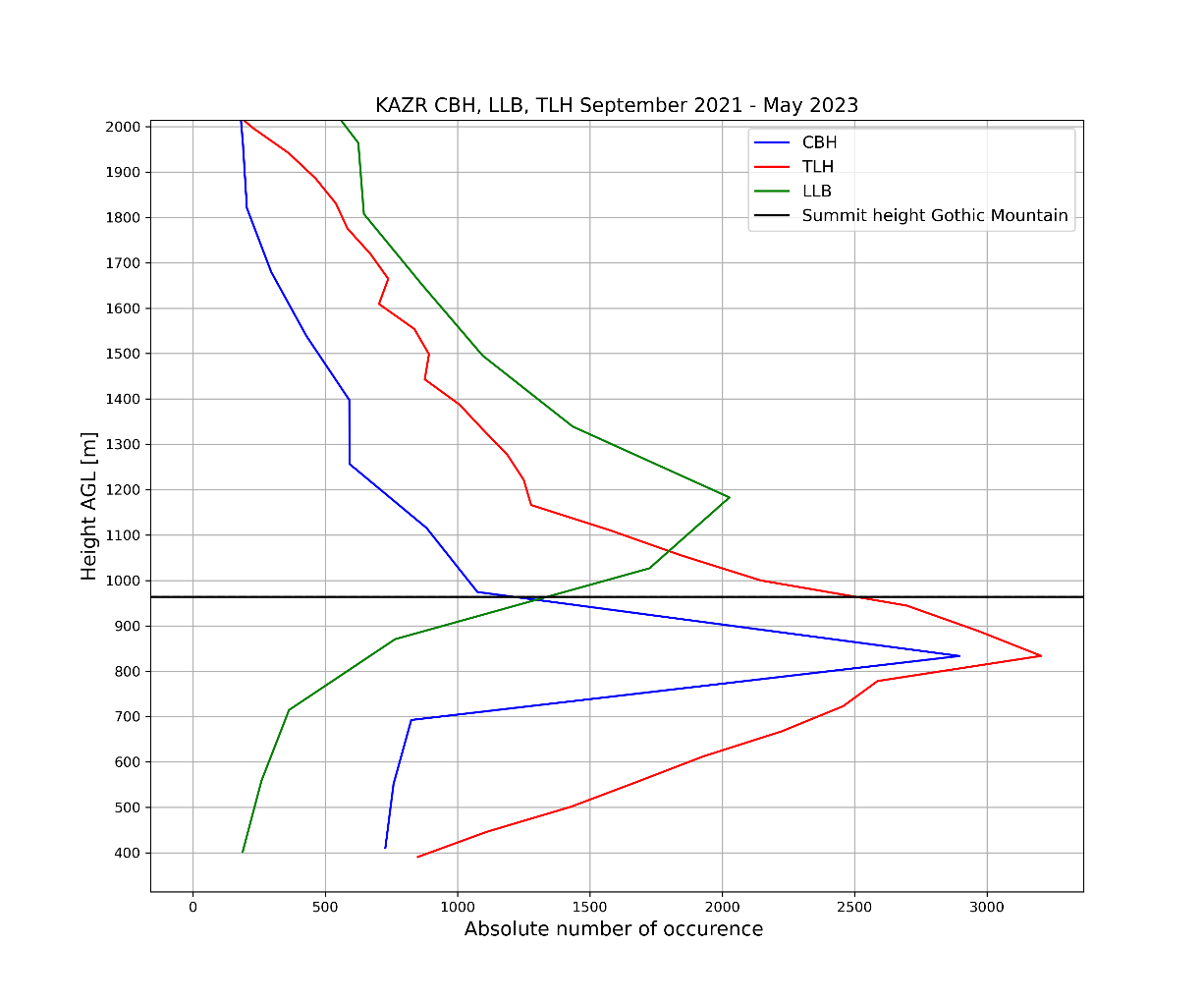
We also focused on characterizing an orographic turbulent layer and the microphysical processes therein for the field campaign site in the Colorado Rocky Mountains. In Fig. 2, statistics of the turbulent layer height (TLH) between Sep 2021 and May 2023 are shown. The most interesting feature is the collocation of TLH and cloud base height, with its peak just below the summit height of Gothic Mountain.
Analyzing riming and particle shape of snow particles
The properties of ice particles, including their number, size, shape, and growth processes such as aggregation and riming, are of central importance to precipitation formation, cloud lifetime, and radiative properties. The Video In-Situ Snowfall Sensor (VISSS, Maahn et al., 2024) was deployed at multiple field sites.
References
A subset of the original 2025 list is rendered here with real metadata and export actions.
-
Maahn, M., D. Moisseev, I. Steinke, N. Maherndl, and M. D. Shupe, 2024. Introducing the Video In Situ Snowfall Sensor (VISSS).
-
Küchler, N., S. Kneifel, U. Löhnert, P. Kollias, H. Czekala, and T. Rose, 2017. A W-Band Radar–Radiometer System for Accurate and Continuous Monitoring of Clouds and Precipitation.
In the first project year, simultaneous snowfall measurements with VISSS and LIMRAD94 were performed at the Rocky Mountain Biological Lab (RMBL) in winter 2022/2023, embedded in the SAIL measurement campaign. As a result, a unique synergistic dataset of snowfall in orographically complex terrain was published.
Analysis of Radar Data
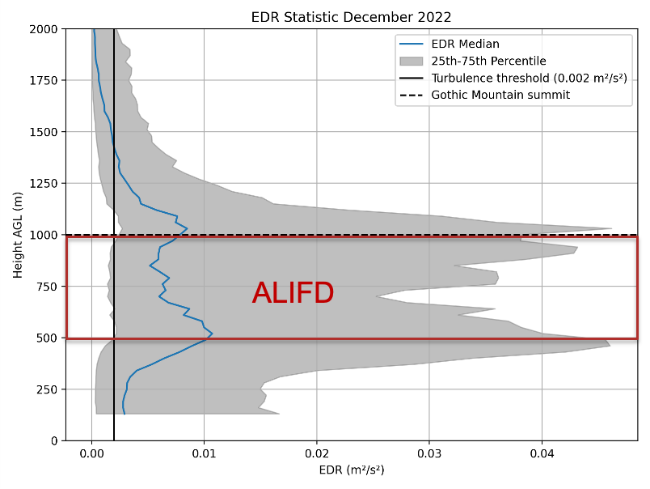
Wind and turbulence play an important role in orographically complex areas and lead to an increase in riming and secondary ice production. Our measurement devices are located in the lee of Gothic Mountain during westerly winds, producing a region of lee-induced flow disturbance. Two areas of increased wind shear can be identified by maxima of eddy dissipation rate at 500 m and 1000 m AGL (see Fig. 1).
Using collocated in situ measurements from VISSS, we found that snow particle populations with different properties, sizes and number concentrations can lead to similar KDP magnitudes. Another interesting finding was that blowing snow appears capable of producing high KDP values as well.
Analysis of VISSS In Situ Data
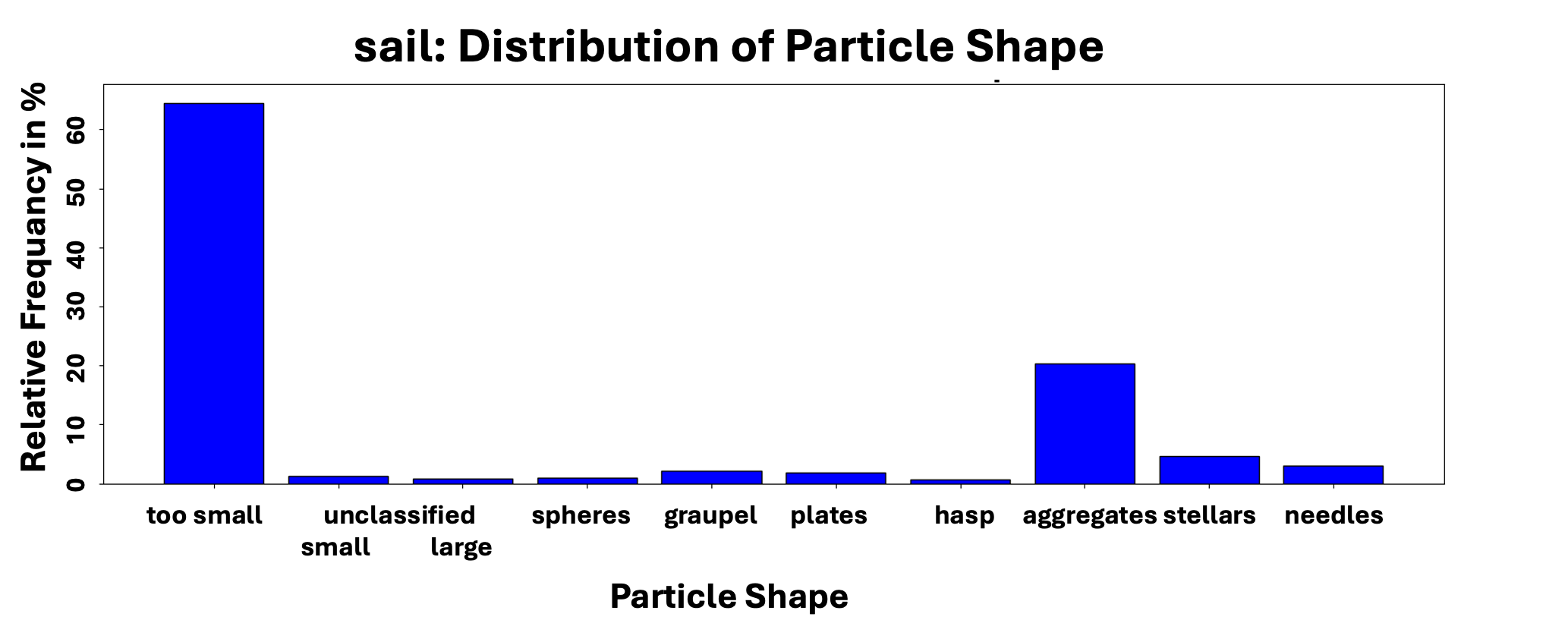
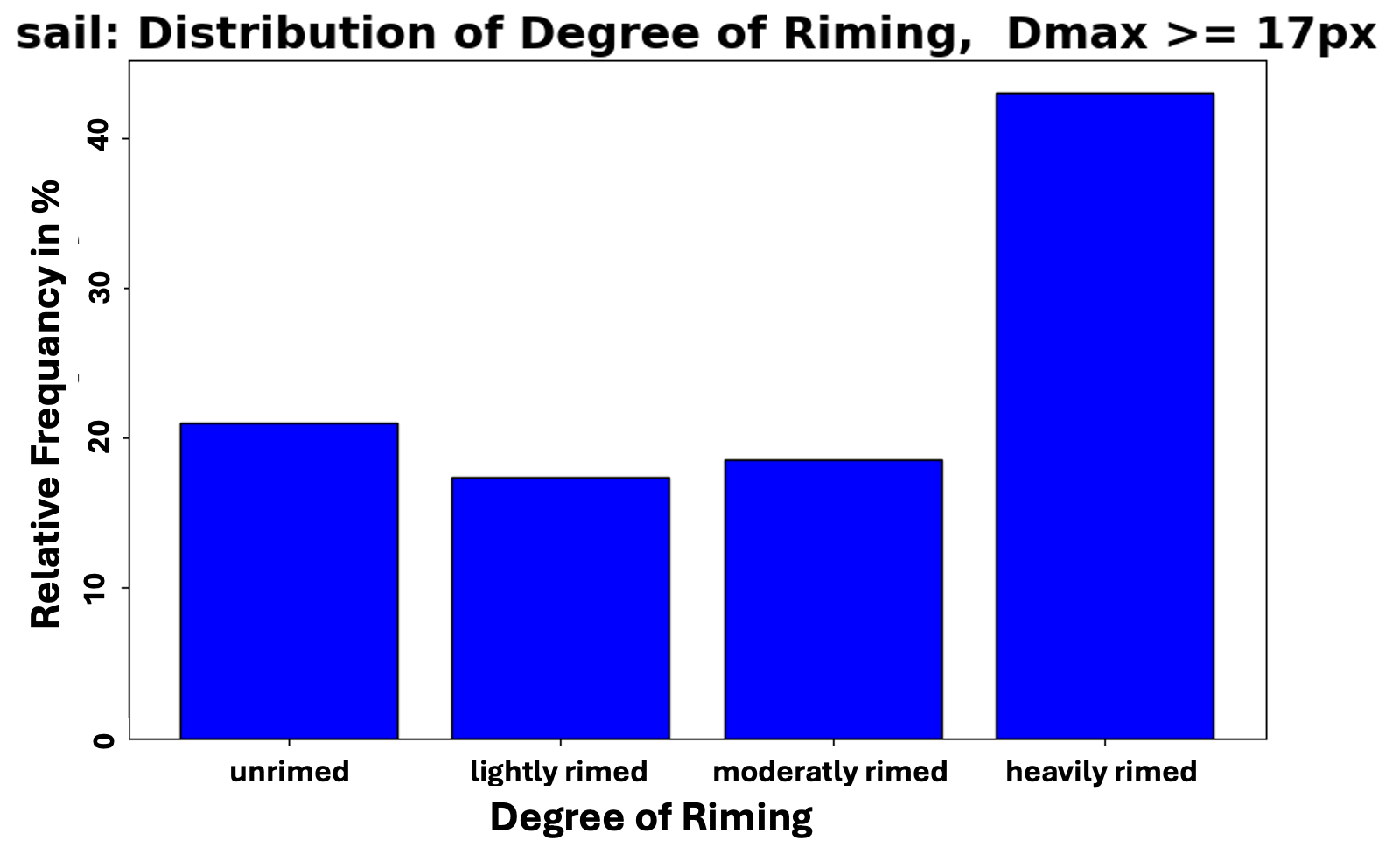
Ice particle properties such as number, size and shape, and processes like aggregation and riming, influence precipitation formation, lifetime and radiative properties of mixed-phase and ice clouds. More than 70% of the particles are too small to be classified correctly. Among particles for which shape can be determined, aggregates are the most common, followed by stellars/dendrites.
Using SAIL measurements to support the ESA Earth Explorer 11 candidate mission WIVERN
WIVERN (WInd VElocity Radar Nephoscope) is planned to be equipped with a conical scanning 94 GHz radar and a passive 94 GHz radiometer. Slanted LIMRAD94 observations during SAIL were used to obtain statistics of KDP in snowfall for developing a WIVERN instrument simulator.